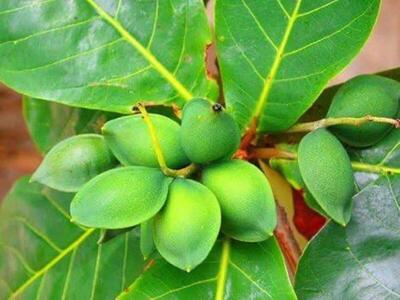
Almond Fruit Leaves: A Complete Guide to Their Health Benefits, Traditional Medicine Uses, and Folk Healing Legacy
Quantity
Free Shipping
On orders over ₦50,000
2 Year Warranty
Full coverage
30-Day Returns
Money-back guarantee
Product Features
- Yoruba (Nigeria, West Africa): Ewé Frutu Almundo or Ewé Ofio
- Hausa (Nigeria): Ganyen Gyada
- Igbo (Nigeria): Akwukwo Oji Oyibo
- Akan (Ghana): Abrodwe Dua
- Ayurveda (Sanskrit, India): Badam Patra
- Hindi (India): Badam Ke Patte
- Tamil: Vadhumai Elai
- Chinese Traditional Medicine: Xing Ren Ye
- Swahili (East Africa): Majani ya Mlozi
- Regulate irregular menstruation
- Ease painful periods (dysmenorrhea)
- Boost fertility by strengthening the womb
- Promote lactation in new mothers
- Adults: Boil a handful of fresh Almond Fruit Leaves in 1 liter of water for 15–20 minutes. Drink half a teacup 2–3 times daily.
- Children: Smaller doses (2–3 tablespoons) are recommended, often sweetened with honey.
- Boil fresh Almond Fruit Leaves in lime juice and water.
- Take 4 tablespoons, 3 times daily.
- Crush fresh Almond Fruit Leaves into a paste.
- Apply directly to wounds, rashes, or herpes sores.
🌿 Almond Fruit Leaves: A Complete Guide to Their Health Benefits, Traditional Medicine Uses, and Folk Healing Legacy
For centuries, Almond Fruit Leaves have held an esteemed place in traditional medicine across Africa and Asia. Known not only for their association with the nutritious almond nut but also for their remarkable healing potential, these leaves are used in herbal cures for conditions ranging from malaria, asthma, stomach ulcers, and diabetes to wounds, fertility, and skin health. Today, as more people search for natural remedies rooted in folk wisdom, Almond Fruit Leaves health benefits are once again gaining attention worldwide.
In this long-form educational article, we will explore the rich folk healing traditions, cultural uses, scientific studies, and practical remedies associated with Almond Fruit Leaves. The keyword “Almond Fruit Leaves health benefits” will be emphasized throughout, helping seekers of natural wellness find authoritative and detailed knowledge about this powerful herbal medicine.
🌍 Traditional Names of Almond Fruit Leaves
Before diving into their medicinal potential, it’s important to recognize how Almond Fruit Leaves are identified across different cultures. Traditional names often carry deep spiritual and cultural meaning, reflecting the role these leaves have played for generations.
These names reflect how Almond Fruit Leaves health benefits are acknowledged across Africa and Asia, highlighting their widespread role in folk medicine.
🌿 Medicinal Uses of Almond Fruit Leaves in Folk Healing
1. Herbal Cure for Malaria and Fever
In West African folk healing traditions, Almond Fruit Leaves are boiled into a bitter decoction used as a herbal cure for malaria. The leaves are thought to cool the blood, reduce fever, and restore strength after infection. In parts of Ghana and Nigeria, healers add lime juice or ginger root to enhance potency.
Anecdotally, villagers recount how Almond Fruit Leaf tea saved lives before modern pharmaceuticals became widely available. Today, even in urban communities, some people still turn to Almond Fruit Leaves health benefits for malaria relief, often combining them with neem or pawpaw leaves.
2. Asthma and Respiratory Healing
One of the most famous Almond Fruit Leaves health benefits is their role in managing asthma, coughs, and bronchitis. Traditional healers recommend boiling the leaves with lime juice and drinking small doses throughout the day.
The combination is said to clear mucus, reduce wheezing, and calm inflamed airways. Some preparations also include honey for added soothing. In Yoruba herbal traditions, the mixture is used especially for children struggling with nighttime cough.
3. Stomach Ulcer and Digestive Health
Perhaps one of the most enduring folk uses is as a herbal cure for stomach ulcers and digestive problems. Traditional users say that Almond Fruit Leaf decoctions help coat the stomach, reduce burning pain, and speed healing of internal wounds.
Herbalists often combine Almond Fruit Leaves with guava leaves or dried pawpaw leaves for maximum digestive relief. This has made Almond Fruit Leaves health benefits popular among communities where stomach ulcers are common due to irregular meals, stress, or overuse of alcohol.
4. Herbal Cure for Hypertension and Diabetes
High blood pressure and diabetes are two modern conditions that folk healers believe can be managed with Almond Fruit Leaf teas. In Northern Nigeria, the leaves are steeped in hot water overnight and consumed each morning to “purify the blood” and “calm the heart.”
Recent ethnopharmacological studies suggest that Almond Leaves contain flavonoids and tannins with antioxidant and anti-inflammatory properties that may indeed support cardiovascular health. This validates why Almond Fruit Leaves health benefits are heavily emphasized for these conditions in traditional medicine.
5. Women’s Health: Fertility and Menstruation
In African herbal traditions, Almond Fruit Leaves are considered a women’s herb. Decoctions are given to:
Women who struggle with low breast milk production are advised to drink Almond Leaf tea daily. This makes Almond Fruit Leaves health benefits not just medicinal but deeply tied to family and cultural continuity.
6. Wound Healing and Skin Care
When crushed and applied externally, Almond Fruit Leaves are used as poultices for wounds, boils, skin infections, and herpes sores. The antimicrobial nature of the leaves helps prevent infection, while their cooling properties reduce pain and inflammation.
In traditional medicine, skin baths made with Almond Leaf water are also prescribed for eczema, candidiasis, and rashes. This external use continues to highlight the broad Almond Fruit Leaves health benefits beyond internal healing.
7. Immunity and General Strength
Traditional healers often recommend Almond Leaf tonics for general weakness, convalescence after illness, and seasonal immunity building. By cleansing the blood and supporting organ function, Almond Fruit Leaves are believed to prepare the body for seasonal changes and ward off infections.
🍵 Preparation & Dosage in Traditional Medicine
1. Decoction (Tea Form)
2. Lime Juice Combination
This is a well-known Yoruba recipe for asthma and malaria.
3. Poultice for Wounds
4. Powdered Form
Dried Almond Leaves are ground into powder and mixed with honey or palm oil. This is especially used for stomach ulcers.
🌱 Cultural and Spiritual Significance
In West African traditions, Almond Fruit Leaves are sometimes used in spiritual baths for purification, breaking curses, and restoring balance. In Yoruba Ifá practices, healers consider the leaves sacred, linking them to the cleansing of negative energies.
In Indian Ayurveda, Badam Patra is associated with calmness, cooling energy, and balance of pitta dosha, which corresponds to heat and inflammation in the body.