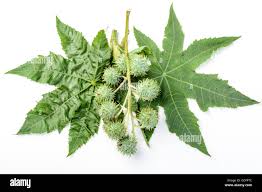
Castor Plant Leaves (Ricinus communis): A Complete Guide to Their Medicinal and Therapeutic Benefits
Quantity
Free Shipping
On orders over ₦50,000
2 Year Warranty
Full coverage
30-Day Returns
Money-back guarantee
Product Features
- Enhances insulin action
- Reduces oxidative stress (a driver of diabetic complications)
- Promotes glucose metabolism
- Reduces liver inflammation
- Promotes detoxification pathways
- Helps regenerate damaged liver tissue
- Preventing frequent colds and flu
- Supporting recovery after illness
- Strengthening immunity in people with weak resistance
- Infusions made from the leaves are used for stomach upset, bloating, and mild constipation.
- In some African households, the leaves are used in soups or decoctions for cleansing the gut.
- Fresh leaves warmed and placed on wounds as a poultice
- Decoction used as a wash for infected cuts and sores
- Improve blood circulation to hair follicles
- Reduce dandruff and scalp infections
- Promote thicker, healthier hair
- Leaf paste is applied directly to pimples and rashes
- Infused oil from the leaves is used for eczema patches
- Leaf decoction can be used as a skin wash for fungal infections
- Flavonoids (antioxidant, anti-inflammatory)
- Alkaloids (antimicrobial, immune-boosting)
- Terpenoids (anti-inflammatory, hepatoprotective)
- Saponins (antimicrobial, cholesterol-lowering)
- Phenolic acids (antioxidant, detoxifying)
- Yoruba (Nigeria): Called ẹ̀wé laráwó, used for joint pain, wounds, and lactation.
- Igbo (Nigeria): Known as akwụ ọjà, used in postpartum care.
- Hausa (Nigeria): Called giginya, used for fever, wounds, and inflammation.
- Ghana: Used in soups and decoctions for liver health and lactation.
- Ethiopia & Sudan: Used as poultices for wounds and arthritis.
- Leaf tea/decoction: 1–2 fresh leaves boiled in water for 10–15 minutes.
- Poultice: Fresh leaves warmed and applied directly to affected skin.
- Infused oil: Leaves soaked in carrier oil for external use.
- Avoid excessive internal consumption (strong laxative effects).
- Pregnant women should avoid high doses.
- Always consult a healthcare professional before long-term use.
🌿 Castor Plant Leaves (Ricinus communis): A Complete Guide to Their Medicinal and Therapeutic Benefits
Introduction to Castor Plant Leaves
When most people hear the word castor, their minds immediately go to castor oil, the thick, golden liquid pressed from the seeds of the Ricinus communis plant. But what is often overlooked is that the Castor Plant Leaves themselves are a medicinal powerhouse, used for centuries in African, Asian, and South American traditional medicine.
The Castor Plant Leaves are large, star-shaped, and rich in bioactive compounds such as flavonoids, alkaloids, terpenoids, and saponins. These compounds are responsible for their anti-inflammatory, antimicrobial, detoxifying, and immunomodulatory effects. Unlike the seeds—which contain the highly toxic compound ricin—the leaves are safe when properly prepared and widely used in home remedies, traditional healing practices, and modern herbal medicine.
In Yoruba, Castor Plant Leaves are called “ẹ̀wé laráwó”, in Igbo they are known as “akwụ ọjà”, while in Hausa, they are referred to as “giginya”. Across Africa and beyond, these leaves are used both internally (as teas, decoctions, and extracts) and externally (as poultices, pastes, and washes).
This article explores the dual power of Castor Plant Leaves: their internal medicinal benefits for conditions like diabetes, liver disease, immune support, and digestive health, as well as their external uses for wounds, skin infections, lactation support, and beauty care. By the end, you’ll understand why Castor Plant Leaves are a true all-rounder in natural healing.
Medicinal Benefits of Castor Plant Leaves (Internal Uses)
🌿 Castor Plant Leaves and Diabetes Management
Diabetes is one of the most searched health conditions linked to herbal remedies, and Castor Plant Leaves have shown promise in regulating blood sugar.
A study published in the Journal of Ethnopharmacology (2017) found that extracts from Castor Plant Leaves helped lower blood glucose levels in animal models by improving insulin sensitivity and reducing oxidative stress in pancreatic cells. The flavonoids and alkaloids present in the leaves may play a role in stimulating glucose uptake in cells, making them a natural adjunct for diabetes management.
How it works:
For people struggling with Type 2 diabetes or prediabetes, a warm Castor Leaf tea (taken in moderation) has traditionally been used to balance blood sugar naturally.
🌿 Castor Plant Leaves for Liver Detoxification and Protection
The liver is the body’s natural detoxifier, and Castor Plant Leaves are recognized for their hepatoprotective properties.
Research in the Asian Pacific Journal of Tropical Medicine (2018) reported that Castor Plant Leaf extracts protected the liver from toxin-induced damage by reducing inflammation and oxidative stress markers. This makes them useful in conditions like fatty liver, hepatitis, and general liver overload from alcohol or processed foods.
Key benefits for the liver:
Many traditional healers recommend Castor Plant Leaf decoctions as part of detox regimens for people recovering from illness or prolonged drug use.
🌿 Castor Plant Leaves for Immune System Strengthening
Another powerful benefit of Castor Plant Leaves lies in their immunomodulatory effects. The alkaloids and terpenoids in the leaves help regulate the immune response, enhancing the body’s defense against infections while reducing excessive inflammation.
A study in the Journal of Medicinal Plants Research (2016) confirmed that extracts of Castor Plant Leaves stimulated white blood cell production and increased the activity of macrophages—immune cells responsible for swallowing harmful pathogens.
This makes them valuable for:
🌿 Castor Plant Leaves and Digestive Support
Traditionally, Castor Plant Leaves have been used to aid digestion and relieve constipation. While castor oil is the more famous laxative, the leaves themselves contain mild digestive stimulants that can help with sluggish bowels and indigestion.
Their anti-parasitic activity has also been studied, showing effectiveness against intestinal worms and pathogens.
External Uses of Castor Plant Leaves
🌿 Wound Healing and Antimicrobial Protection
Perhaps the most celebrated use of Castor Plant Leaves is in external healing.
Traditional medicine across Africa and Asia uses the leaves as poultices applied directly to wounds, ulcers, boils, and skin infections. Their strong antimicrobial and anti-inflammatory properties accelerate wound closure, reduce swelling, and prevent bacterial growth.
A study in the International Journal of Pharmaceutical Sciences (2019) demonstrated that Castor Plant Leaf extracts inhibited the growth of bacteria such as Staphylococcus aureus and E. coli, both common culprits in wound infections.
How to use:
🌿 Pain and Inflammation Relief
The anti-inflammatory properties of Castor Plant Leaves make them a natural remedy for arthritis, rheumatism, and joint pain.
In Yoruba traditional medicine, heated Castor Plant Leaves are placed on swollen joints to relieve pain. Scientific evidence suggests that the flavonoids in the leaves help reduce pro-inflammatory cytokines, easing discomfort.
🌿 Hair Growth and Scalp Health
Like castor oil, Castor Plant Leaves are believed to stimulate hair growth and improve scalp health. Used in paste or decoction form, they:
Some African beauty regimens use Castor Plant Leaf rinses to strengthen natural hair and reduce breakage.
🌿 Skin Care: Acne, Rashes, and Eczema
Because of their antimicrobial activity, Castor Plant Leaves are a trusted natural treatment for skin issues such as acne, rashes, eczema, and fungal infections.
🌿 Boosting Lactation in Nursing Mothers
One unique and culturally important use of Castor Plant Leaves is their role in stimulating breast milk production.
In parts of Nigeria and Ghana, nursing mothers apply warmed Castor Plant Leaves on the breasts to enhance milk flow. Studies published in the African Journal of Reproductive Health (2015) support their galactagogue effect, likely due to phytoestrogens in the leaves that influence prolactin levels.
Phytochemical & Nutritional Composition of Castor Plant Leaves
The medicinal power of Castor Plant Leaves comes from their bioactive compounds, including:
These compounds give Castor Plant Leaves their dual action for both internal and external healing.
Cultural & Traditional Uses Across Africa
In Africa, Castor Plant Leaves are not just medicine but part of everyday life:
Dosage, Preparation & Safety Considerations
While Castor Plant Leaves are safe when properly prepared, they should be used with caution and guidance.
Common preparations:
Safety notes:
Conclusion: Why Castor Plant Leaves Are a Dual-Action Medicinal Herb
The Castor Plant Leaves (Ricinus communis) are a superior medicinal herb that serves both internal and external health needs. Internally, they support diabetes management, liver health, immune strengthening, and digestion. Externally, they are trusted for wound healing, inflammation relief, skin care, hair growth, and lactation support.
Backed by both traditional wisdom and modern science, Castor Plant Leaves remain one of nature’s most versatile remedies. Their dual-action benefits make them a valuable addition to any herbal medicine collection, proving that this humble leaf is far more than just the parent of castor oil—it is a healing powerhouse in its own right.