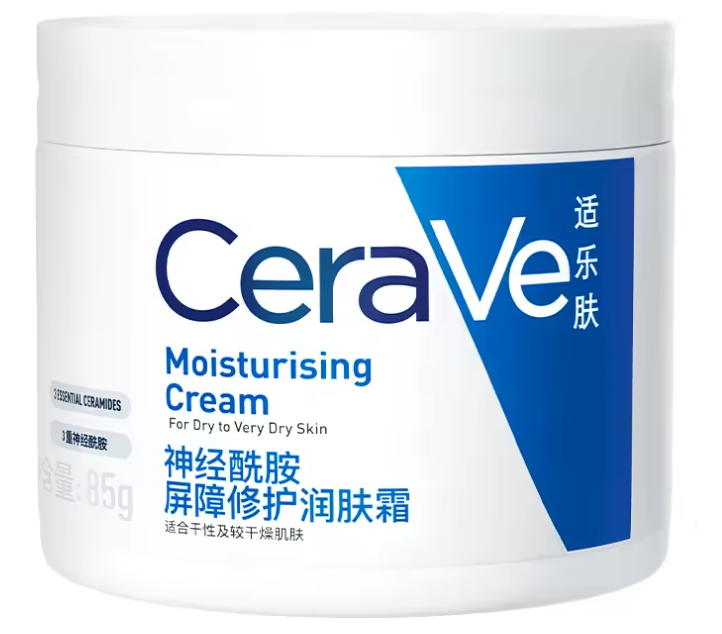
CeraVe Moisturizing Cream 85g for Dry to Very Dry Skin
Quantity
Free Shipping
On orders over ₦50,000
2 Year Warranty
Full coverage
30-Day Returns
Money-back guarantee
Product Features
- Reduce transepidermal water loss (water escaping from the skin).
- Support the lipids and structure that keep irritants out and hydration in.
- The skin cells are the bricks.
- The lipids between them are the mortar.
- Ceramides support barrier integrity over time.
- A stronger barrier can mean less water loss and less irritation.
- Many people with eczema prone skin have reduced ceramides in the outer layer.
- Dry to very dry skin
- Sensitive skin that reacts easily
- Tightness after cleansing or showering
- Flaking, rough texture, or seasonal dryness
- Frequent hand washing dryness
- Eczema prone skin that needs daily supportive care (alongside medical advice and treatment plans)
- Dry patches on elbows, knees, hands, or around the nose and mouth
- You hate thick textures and will not use them consistently
- You live in a very humid climate and your skin feels greasy easily
- You have extremely oily skin and almost never feel dry
- Gentle cleanser (or just water in the morning if you are very dry)
- Moisturizer that supports the barrier
- Sunscreen in the morning (face, neck, exposed skin)
- Easy for travel and overnight bags
- Fits into a daily routine without the giant tub commitment
- Good for personal use if you are not moisturizing your whole body daily
- Convenient for spot use (hands, elbows, face, dry patches)
- After a shower, gently pat skin so it is still slightly damp, then apply the cream.
- After washing your face, apply it right away rather than waiting until your skin feels tight.
- After hand washing, apply a small amount while hands are still slightly damp.
- Apply after bathing, always.
- Use it on “normal” skin too, not just the obvious dry patches.
- If you have flare areas, follow your clinician’s plan (topical medications, etc) and use moisturizer as supportive care around it.
- Apply moisturizer first, then the active (the buffering method), or
- Apply the active first, let it absorb, then apply moisturizer
- Less tightness after washing
- Less flaking around the nose, mouth, cheeks, or legs
- Less itching, especially after showers
- Smoother texture on rough areas
- Better tolerance to weather changes
- Applying it to totally dry skin in a dry environment, so there is little water to hold onto
- Using harsh soaps or very hot water, constantly breaking down the barrier, then expecting the moisturizer to compensate
- Using it inconsistently (once every few days)
- Not using enough
- Expecting one product to fix eczema flares without medical treatment
- Layering it over irritating actives without adjusting frequency
Why Dermatologists Recommend CeraVe Moisturizing Cream
 Dry, sensitive skin is one of those problems that sounds simple until you actually deal with it every day.
One week it is cold weather. Next week it is hot showers. Then you switch soaps, try a new body wash, wash your hands a little more than usual, and suddenly your skin is tight, itchy, flaky, kind of angry. And the annoying part is that a lot of moisturizers only “fix” it for an hour. Your skin feels better for a bit, then right back to dry again.
That is usually the clue that the issue is not just missing moisture. It is the skin barrier.
Dermatologists talk about barrier repair constantly, because when your skin barrier is weakened, water escapes more easily and irritants get in more easily. That combination creates the cycle people describe as “my skin is always dry no matter what I use.”
CeraVe Moisturizing Cream is popular in dermatology offices for a reason. It was developed with dermatologists and it is built around barrier support, not just surface softness. It uses ceramides to help restore the barrier and hyaluronic acid to help hold onto hydration. It is also fragrance free and non comedogenic, which matters a lot when skin is sensitive or acne prone.
And yes, the 85g size is actually a nice sweet spot. Big enough to use daily. Small enough to travel with or keep in a bag without committing to a giant tub.
Let’s break down why dermatologists recommend it, who it tends to work best for, and how to use it in a way that actually gives lasting results.
The real reason many moisturizers fail on dry skin
Here is what happens with a lot of basic lotions.
They add some water, maybe some lightweight oils, and your skin immediately feels smoother. But if they do not help reinforce the skin barrier, that moisture can evaporate quickly. Especially if you are in dry weather, using hot water, using strong cleansers, or dealing with eczema prone skin.
So you keep reapplying, thinking you just have “extra dry skin.” Sometimes it is extra dry skin, sure. But very often it is a barrier problem underneath.
A barrier focused moisturizer tries to do two things:
That is basically the lane CeraVe Moisturizing Cream stays in. It is not trying to be fancy. It is trying to be functional.
What is the skin barrier, in normal human terms
Your skin barrier is the outermost layer of your skin. Think of it like a brick wall.
Ceramides are a major part of that “mortar.” When ceramides are low or disrupted, the wall gets leaky. Then you see dryness, sensitivity, redness, rough patches, and sometimes that burning feeling when you apply products that never used to bother you.
Dermatologists recommend barrier repairing moisturizers because they are one of the simplest ways to interrupt that cycle. You cannot always control the weather or your job requiring constant hand washing. But you can control what you put on your skin after.
Why CeraVe’s formula stands out (without overhyping it)
A lot of brands use words like “hydrating” and “soothing” and “repairing.” But CeraVe’s core approach is pretty consistent across products: barrier support plus hydration, with a gentle, practical formula.
1. Ceramides: the barrier repairing piece
CeraVe Moisturizing Cream includes three essential ceramides (commonly listed as ceramide NP, AP, and EOP). These are lipids naturally found in the skin.
When dermatologists talk about ceramide moisturizers, it is usually because:
This is why CeraVe often gets recommended as supportive care for eczema prone skin. It is not a prescription treatment for eczema, but it can support the skin environment so you flare less often, or at least feel less dry and itchy in between treatments.
2. Hyaluronic acid: hydration that actually stays put (when used correctly)
Hyaluronic acid is a humectant. It pulls water into the skin.
On its own, it is not enough for very dry skin. This is where people get confused. They use a hyaluronic serum, feel nice for a moment, then get dry again.
The fix is to pair humectants with occlusives and barrier lipids. CeraVe Moisturizing Cream does that. So the hyaluronic acid helps hydrate, and the richer cream base helps keep that hydration from disappearing immediately.
One small tip that makes a big difference: apply it on slightly damp skin. Not dripping wet. Just not completely dry. That gives humectants more water to work with.
3. Fragrance free: a big deal for sensitive skin
Fragrance is one of the most common irritants in skincare. Some people tolerate it fine, and some do not. But when you are dealing with dryness, sensitivity, or eczema prone skin, fragrance is one of the first things dermatologists recommend removing.
CeraVe Moisturizing Cream is fragrance free, which helps reduce the chance of stinging or irritation.
4. Non comedogenic: face friendly even though it is a “body cream”
A lot of thick creams clog pores for some people. This is why many acne prone folks avoid heavy moisturizers, even when their skin is dry.
CeraVe Moisturizing Cream is labeled non comedogenic, and many people do well using it on the face. Not everyone will. Skin is personal. But it is one of the few richer creams that often works for both face and body.
If you are oily acne prone and nervous, you can start by using it only at night, or only on drier zones first (cheeks, around the mouth), and see how your skin responds.
Who CeraVe Moisturizing Cream is best for
This cream tends to work best for people who need consistent barrier support, not just a “light moisturizer for a normal day.”
It is a great match if you have:
It can also be helpful if you are using drying treatments
If you use retinoids, acne treatments like benzoyl peroxide, or you are overdoing exfoliation, your barrier can get irritated fast. A barrier supporting cream can make those routines more tolerable.
This is often why dermatologists recommend it as a simple “baseline moisturizer” while someone is on prescription skincare.
Who might want something else
It is not that CeraVe is bad. Just that different textures and formulas fit different needs.
You might consider a lighter lotion instead if:
And if you have severe eczema, cracked skin, weeping patches, or signs of infection, that is a medical situation. Moisturizer helps, but it is not the whole plan.
Why dermatologists like the “boring” routine approach
One reason CeraVe shows up in dermatologist recommendations is that it fits into a routine that is easy to follow.
Dermatologists are usually not trying to build you a 10 step routine. They are trying to get you stable skin first.
A simple barrier friendly routine looks like:
Then, once your skin is calm, you can add treatments if you need them.
CeraVe Moisturizing Cream works well in that kind of routine because it does not fight with other products. No heavy fragrance. No actives that can complicate irritation. It just sits there and does its job.
The 85g size: why it is actually useful
The 85g size is one of those practical formats that people end up loving for a few reasons:
It is also a nice option if you are trying CeraVe Moisturizing Cream for the first time and do not want to start with a huge container.
How to use CeraVe Moisturizing Cream for best results
A lot of people use a good moisturizer in a way that makes it less effective. Usually without realizing it.
Here is how to get more out of it.
1. Use it after cleansing and after bathing, not whenever you remember
Timing matters because water exposure can increase water loss once it evaporates. Instead of letting your face air dry after washing, which can lead to increased dryness, it's better to apply moisturizer while your skin is still slightly damp. This technique helps to “lock in” water.
2. Use enough product (most people underuse)
If your skin is very dry and you apply a tiny pea sized amount to your whole face, it might not cut it.
For face, start with a small amount and adjust. For body, use enough that the skin feels comfortable, not coated in a thick film. You want a layer, not a mask.
3. Be consistent for at least 1 to 2 weeks
Barrier repair is not instant.
You might feel softer immediately, but the real change usually comes with consistent use. Many people notice less itching and less tightness after several days, then more stability after a couple of weeks.
4. For eczema prone skin, layer strategically
If your skin is eczema prone, consistency matters even more.
5. If you use actives, use the cream as a buffer
If retinoids or acids irritate you, you can:
Some people do better with one method than the other. The goal is comfort and consistency, not suffering through a routine.
What results to expect (realistically)
CeraVe Moisturizing Cream is not going to change your skin overnight in a dramatic way. It is more like… your skin stops complaining.
Common improvements people notice:
If you are expecting a cosmetic “glow” product, this is not really that. It is a steady, dependable barrier cream.
Common mistakes that make it seem like it “doesn’t work”
If someone tells you CeraVe did nothing for them, it is often one of these:
None of this is a moral failure, by the way. It is just how skin works.
FAQ
Is CeraVe Moisturizing Cream good for sensitive skin?
Yes, it is commonly recommended for sensitive skin because it is fragrance free and focused on barrier support with ceramides and hydration support like hyaluronic acid.
Can I use CeraVe Moisturizing Cream on my face?
Many people do. It is non comedogenic and suitable for face and body. If you are acne prone, start with a small amount or use it at night first to see how your skin reacts.
Is it safe for kids?
It is widely used by adults and children with dry to very dry skin. If your child has severe eczema or persistent rashes, it is still best to check with a pediatrician or dermatologist for a full plan.
Does it help eczema?
It can help as supportive care by reducing dryness and supporting the skin barrier, which may reduce irritation and itching. But it is not a prescription eczema treatment. For active flares, follow medical guidance.
How often should I apply it?
Most people do well with 1 to 2 times daily. If your skin is very dry, you may need more frequent application, especially after washing hands or bathing.
Should I apply it on wet or dry skin?
Slightly damp skin is ideal. Apply after cleansing or bathing while your skin still has a little moisture, then the cream helps seal it in.
Will it feel greasy?
It is a richer cream, so it can feel heavier than a lotion. Most people find it absorbs well after a few minutes. If it feels too heavy, use a smaller amount, apply on damp skin, or reserve it for nighttime.
What is the benefit of the 85g size?
The 85g size is convenient for personal daily use, travel, and keeping in a bag or at work. It is also a good way to try the cream without buying a large tub.
Can I use it with retinoids or acne treatments?
Yes. Many dermatologists recommend barrier supportive moisturizers alongside retinoids or other drying treatments. You can apply it after your treatment or use it as a buffer if you are easily irritated.
How long does it take to see results?
You may feel immediate comfort, but more lasting improvement in dryness and irritation usually comes with consistent daily use over 1 to 2 weeks, sometimes longer depending on how compromised the barrier is.