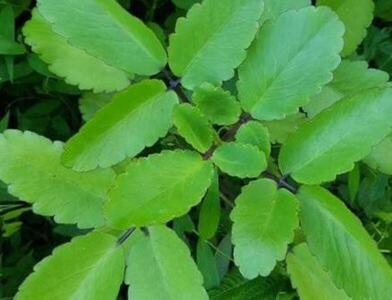
Miracle Leaves(500g) Health Benefits: The Ultimate Herbal Cure for Diabetes and More
Quantity
Free Shipping
On orders over ₦50,000
2 Year Warranty
Full coverage
30-Day Returns
Money-back guarantee
Product Features
- Family: Crassulaceae
- Genus: Bryophyllum / Kalanchoe
- Species: Bryophyllum pinnatum (Lam.) Oken
- Yoruba (Nigeria): Ewe Abamoda, Odundun (“the cool one”)
- Igbo (Nigeria): Odaa opuo, Ọdụn osisi
- Hausa (Nigeria): Cikakkiyar ganye
- Akan (Ghana): Abamoda
- Pan-African/General: “Never Die,” “Life Plant,” “African Never Die”
- Relief from ulcers and gastritis
- Management of diarrhea and dysentery
- Protection against stomach pains and indigestion
- Used after childbirth to cleanse the womb
- Believed to help regulate menstruation
- Occasionally used as part of fertility-boosting herbal mixtures
- In Yoruba medicine, Miracle Leaf tea is routinely prescribed for “arun suga” (sugar sickness).
- Among the Igbo, the juice is sometimes combined with lime or bitter kola.
- In Ghana, chewing fresh leaves or drinking leaf infusion is a common folk practice for blood sugar management.
- Ojewole (2005) demonstrated significant reductions in blood glucose in diabetic rats treated with aqueous leaf extract.
- Akinmoladun et al. (2019) identified high levels of flavonoids, alkaloids, and glycosides with hypoglycemic effects.
- Studies also suggest protective effects on the pancreas, antioxidant properties, and improvement in lipid profiles.
- Improves insulin sensitivity – enhances glucose uptake.
- Reduces postprandial blood sugar spikes.
- Protects pancreatic beta cells from oxidative stress.
- Antioxidant activity reduces diabetic complications.
-
Miracle Leaf Tea for Diabetes
- 5–7 fresh leaves boiled in 2 cups of water for 10 minutes.
- Taken warm, once or twice daily.
-
Leaf Juice with Lime
- Freshly squeezed leaf juice mixed with lime juice.
- Taken in small doses for glucose control.
-
Powdered Dry Leaves
- Dried leaves ground into powder.
- Half a teaspoon taken daily with water.
- Flavonoids – antioxidant, anti-inflammatory, hypoglycemic
- Alkaloids – metabolic regulators
- Tannins – antimicrobial, astringent
- Triterpenoids – wound healing, anti-inflammatory
- Phenolic acids – antioxidant activity
- Glycosides – cardiac and metabolic effects
- India (Ayurveda): Known as Patharchur or “stone breaker,” used for kidney stones and urinary problems.
- Caribbean: Called “Wonder of the World,” used for fever, asthma, and hypertension.
- South America: Used in folk medicine for ulcers, digestive issues, and infections.
- Excessive consumption can cause gastrointestinal upset.
- Pregnant women should avoid high doses, as some compounds may affect uterine contractions.
- People on prescription diabetes medications should use with caution to avoid hypoglycemia.
- Fresh leaf infusion: 1–2 cups daily
- Fresh juice: 1–2 tablespoons daily
- Powdered dry leaf: ½ teaspoon daily
- Clinical Trials: Large-scale human studies needed for diabetes, kidney stones, and hypertension.
- Phytochemical Isolation: Identifying and standardizing active compounds.
- Integration into Modern Medicine: Potential for affordable phytomedicines in Africa.
- Ojewole, J.A.O. (2005). Antihyperglycemic effect of Bryophyllum pinnatum (Crassulaceae) leaf aqueous extract in rats. Journal of Ethnopharmacology, 99(1), 13–19.
- Akinmoladun, F.O., Komolafe, T.R., Farombi, O.E. (2019). Antidiabetic and antioxidant properties of Bryophyllum pinnatum. Journal of Medicinal Plants Research.
- Parihar, G., Balekar, N., Jain, D.K. (2012). Pharmacological profile of Bryophyllum pinnatum. Asian Pacific Journal of Tropical Biomedicine.
- Yadav, N.P., Dixit, V.K. (2003). Recent approaches in herbal drug standardization. International Journal of Ayurveda Research.
- Pal, S., Nag, T.N., and Banerjee, A. (2010). Ethnobotanical survey of Bryophyllum pinnatum in traditional medicine. Indian Journal of Traditional Knowledge.
Miracle Leaf (Bryophyllum pinnatum) – Traditional Wisdom and Scientific Insight on the “Never Die” Plant
Introduction
Across Africa, Asia, and other tropical regions of the world, few plants capture the imagination and reverence of local healers quite like the Miracle Leaf. Known scientifically as Bryophyllum pinnatum, and often synonymized with Kalanchoe pinnata, this remarkable perennial succulent has earned dozens of names in different cultures: Ewe Abamoda or Odundun among the Yoruba of Nigeria, Odaa opuo among the Igbo, Cikakkiyar ganye among the Hausa, Abamoda among the Akan of Ghana, and “Never Die” or “Life Plant” in general African usage. Its widespread recognition reflects its deep cultural integration and medicinal importance.
Miracle Leaf is called “miracle” not just for its healing properties but also for its uncanny ability to reproduce itself endlessly. Along the scalloped edges of its fleshy leaves, tiny plantlets sprout and eventually fall to the ground, rooting themselves into new plants without the need for seeds. This phenomenon of regeneration is seen as symbolic of life, resilience, healing, and continuity, making the plant both a medicine and a metaphor in African traditional thought.
In this full-length article, we will explore the botanical features, cultural importance, traditional medicinal uses, scientific validation, and especially its role in managing diabetes — one of the greatest health challenges of modern Africa. We will also look at its wider applications in conditions like infections, hypertension, kidney stones, reproductive health, wound healing, and more. Recipes, dosages, and preparation methods as practiced by traditional herbalists will be highlighted, alongside safety considerations and future directions.
Botanical Profile and Ecology
Scientific Classification
Physical Description
Miracle Leaf is a succulent herb that can reach heights of 1–2 meters. Its leaves are opposite, thick, and fleshy, typically 10–20 cm long, with scalloped margins. The leaf margins bear adventitious buds or tiny plantlets capable of growing into new individuals when detached — a unique feature that has contributed to its mystical reputation.
The flowers are bell-shaped, reddish to purple, borne in hanging clusters on tall stems. The stems are fleshy and hollow, storing water, which allows the plant to survive in dry environments.
Habitat and Distribution
Originally native to Madagascar, Miracle Leaf has naturalized throughout West Africa, East Africa, Asia (India, Philippines), South America, and the Caribbean. It thrives in warm, moist environments but is hardy enough to grow on rocky soils, roadsides, gardens, and fallow lands.
Its resilience and self-propagating nature embody the very qualities for which it is valued in traditional healing — persistence, renewal, and survival.
Cultural Significance and Traditional Names
Miracle Leaf is more than a herb; it is a cultural treasure. Its names across Africa reflect its healing power and spiritual symbolism:
Spiritual Symbolism
In Yoruba spirituality, Odundun is considered a cooling herb that brings relief from heat, both physical (fevers, inflammation) and metaphysical (anger, spiritual disturbances). The Igbo use it in protective charms and household rituals. Among the Akan, it symbolizes endurance and is kept in homes as a living medicine chest.
This combination of medicine and mysticism reinforces its authority in traditional healing practices.
Traditional Medicinal Uses
Miracle Leaf has an extraordinarily wide range of uses in folk medicine, reflecting its versatility. Its applications vary slightly across regions, but certain common threads are observed.
1. Wound Healing and Skin Disorders
Crushed fresh leaves are applied directly to cuts, burns, insect bites, and boils. Its cooling effect soothes pain and prevents infection. Poultices made from the leaves are also used for abscesses, ulcers, and skin eruptions.
2. Respiratory Issues
Decoctions of the leaves are consumed for coughs, chest congestion, asthma, and even tuberculosis in some regions. The expectorant quality helps clear phlegm.
3. Fever and Malaria
In many West African communities, Miracle Leaf tea is used to reduce fevers, especially in children. Some herbalists combine it with other antimalarial herbs like neem (Dogoyaro) for malaria treatment.
4. Kidney Stones and Urinary Disorders
Juice from the leaves is traditionally consumed for dissolving kidney stones. This practice is common in Nigeria, Ghana, and also documented in India. It is also used for urinary tract infections and painful urination.
5. Hypertension and Cardiovascular Health
The Yoruba use Ewe Abamoda teas to calm the body, regulate blood pressure, and prevent stroke. Some communities also chew fresh leaves to reduce palpitations.
6. Gastrointestinal Disorders
7. Reproductive and Women’s Health
8. General Health and Longevity
The name “Never Die” reflects its use as a general tonic for vitality, immune strengthening, and recovery after illness.
Focus on Diabetes
Diabetes in Africa
Diabetes mellitus, particularly type 2 diabetes, is rapidly increasing in Africa due to urbanization, dietary shifts, and lifestyle changes. Pharmaceutical treatments can be expensive and inaccessible, so many communities turn to traditional plants like Miracle Leaf.
Traditional Use for Diabetes
Scientific Validation
Modern research supports these practices:
Mechanisms of Action
Practical Recipes (Traditional Use)
Phytochemistry – Active Compounds
The healing properties of Miracle Leaf come from its rich phytochemical profile:
This diverse chemistry explains why it works across multiple conditions — from infections to diabetes.
Comparative Global Use
This cross-continental convergence suggests universal recognition of its healing power.
Safety, Dosage, and Precautions
Miracle Leaf is generally safe when used in traditional dosages. However:
Typical Dosage:
Future Research Directions
Conclusion
The Miracle Leaf (Bryophyllum pinnatum) truly lives up to its name. From its self-propagating leaves to its wide spectrum of healing powers, it is both a symbol of resilience and a practical herbal medicine. In African traditions, it is trusted for everything from wound healing to hypertension, but its most promising role today may be in the fight against diabetes, where both traditional wisdom and modern science converge.
As research continues, Miracle Leaf could become a key herbal ally in global health, bridging the gap between folk healing and modern medicine.