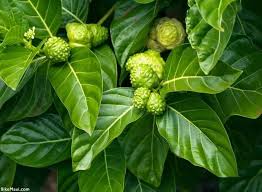
Noni Fruit Leaves, the Ultimate Herb for Skin Health(500)
Quantity
Free Shipping
On orders over ₦50,000
2 Year Warranty
Full coverage
30-Day Returns
Money-back guarantee
Product Features
- A study in Journal of Medicinal Food (2012) showed that extracts of Noni leaves possess strong antioxidant and anti-inflammatory activity.
- Research in Evidence-Based Complementary and Alternative Medicine (2018) confirmed the wound-healing potential of Noni leaf extracts by accelerating collagen production.
- An investigation in Pharmacognosy Magazine (2016) highlighted the antifungal and antibacterial properties of Noni leaves, supporting their traditional use for skin infections.
- Blood Sugar Regulation – Decoctions are traditionally used to manage diabetes by lowering blood glucose levels.
- Immune System Support – The high antioxidant and vitamin C content enhances immunity.
- Digestive Aid – Noni leaf teas relieve bloating, indigestion, and stomach ulcers.
- Fertility and Reproductive Health – Some African traditions use Noni leaves to boost fertility and regulate menstruation.
- Hypertension Management – Noni leaves may help regulate blood pressure by improving circulation and reducing oxidative stress.
- 5–6 fresh Noni leaves
- Wash and boil in 3 cups of water for 15 minutes
- Strain and drink twice daily
- Crush fresh Noni leaves into a paste
- Apply directly on affected skin area
- Cover with clean cloth and leave overnight
- Heat coconut oil and add fresh Noni leaves
- Allow to cool and store in a glass jar
- Massage on skin daily to reduce wrinkles and restore glow
- Adults: 1–2 cups of Noni leaf tea per day, or apply poultice externally as needed.
- Children: Half the adult dosage, under supervision.
- Pregnancy: Consult a professional before internal use. External applications are generally considered safe.
- Wang, M. Y., et al. (2012). "Antioxidant activity of Noni (Morinda citrifolia) leaf extracts." Journal of Medicinal Food.
- Nayak, B. S., et al. (2018). "Evaluation of wound healing activity of Noni (Morinda citrifolia) leaves." Evidence-Based Complementary and Alternative Medicine.
- Kamalakannan, P., et al. (2016). "Phytochemical and pharmacological activities of Morinda citrifolia: A review." Pharmacognosy Magazine.
- Deng, S., & West, B. J. (2012). "Antimicrobial properties of Morinda citrifolia leaves." Journal of Natural Products.
- Singh, D. R. (2011). "Functional properties of Noni leaf in herbal medicine." Asian Journal of Traditional Medicines.
🌿 Noni Fruit Leaves, the Ultimate Herb for Skin Health
Introduction: Why Noni Fruit Leaves Are Called the Ultimate Herb for Skin Health
In the world of herbal medicine, few plants have achieved the global reverence that Noni (Morinda citrifolia) enjoys. While the noni fruit itself has been widely studied for its immune-boosting, digestive, and anti-inflammatory properties, a hidden treasure lies in its leaves. Traditional healers across Africa, Asia, and the Pacific Islands have for centuries relied on Noni Fruit Leaves, the ultimate herb for skin health, for their remarkable ability to restore, rejuvenate, and protect the skin.
When you explore traditional remedies for acne, eczema, fungal infections, wounds, burns, or even natural anti-aging, you will find Noni Fruit Leaves at the heart of many solutions. They are not just used externally; when brewed into teas or decoctions, they work internally to purify the blood, strengthen immunity, and reduce inflammation—all of which reflect on the skin’s radiance and resilience.
In this article, we will take a deep dive into the history, medicinal uses, scientific studies, recipes, and cultural wisdom surrounding Noni Fruit Leaves, the ultimate herb for skin health.
Traditional and Cultural Uses of Noni Fruit Leaves
Noni Leaves in African Herbalism
In many parts of Africa, Noni Fruit Leaves, the ultimate herb for skin health, are prepared into poultices to treat boils, wounds, and skin ulcers. Traditional healers recognized that applying the crushed leaves directly on the skin accelerated healing, reduced pain, and prevented infections.
Noni Leaves in Asia
In India, Noni leaves are used in Ayurveda as a cooling herb. They are believed to balance excess heat (pitta) in the body, which often manifests as skin rashes, acne, or inflammation. Decoctions made from the leaves are also consumed to purify the blood and cleanse the liver—both central to achieving clear skin.
Noni Leaves in the Pacific Islands
In Polynesia, where Noni has long been revered as a “sacred plant,” villagers use heated Noni leaves as compresses for inflamed joints, wounds, and skin infections. Women often used it to maintain smooth and youthful-looking skin, while men relied on it for injuries after fishing or battle.
From Africa to Asia to Oceania, Noni Fruit Leaves, the ultimate herb for skin health, have carried the reputation of a multi-healing green miracle.
Noni Fruit Leaves for Skin Health
Skin problems are among the most common reasons people seek herbal remedies. From ancient times until today, Noni Fruit Leaves, the ultimate herb for skin health, have been relied on for the following conditions:
1. Herbal Cure for Acne
The antibacterial properties of Noni leaves make them an excellent natural solution for acne. Applying Noni leaf paste directly on pimples helps dry them out, reduce inflammation, and prevent scarring. A study published in Pharmacognosy Reviews (2016) confirmed the strong antibacterial action of Noni extracts, which explains its effectiveness against acne-causing bacteria.
2. Herbal Cure for Eczema and Psoriasis
Skin conditions like eczema and psoriasis are often linked to inflammation and immune imbalance. Traditional healers recommend bathing with boiled Noni leaves or applying leaf-infused oil on affected patches. The cooling and soothing effect reduces itching and redness, offering natural relief without steroids.
3. Anti-Aging and Skin Glow
Noni leaves are rich in antioxidants, particularly quercetin and kaempferol, which fight free radicals responsible for skin aging. Regular use of Noni leaf masks helps smooth fine lines, restore elasticity, and improve overall skin glow. This is why many natural beauty experts describe Noni Fruit Leaves, the ultimate herb for skin health, as a “green fountain of youth.”
4. Herbal Cure for Wounds and Burns
When applied directly to cuts, wounds, or burns, crushed Noni leaves act as a natural antiseptic. They prevent infection while stimulating faster tissue regeneration. Polynesian healers traditionally wrapped wounds with heated Noni leaves to accelerate healing—a practice now validated by modern science.
5. Herbal Cure for Skin Infections
The antifungal and antimicrobial properties of Noni Fruit Leaves, the ultimate herb for skin health, make them highly effective against ringworm, athlete’s foot, candidiasis, and other fungal infections. Leaf decoctions are used as a skin wash for stubborn infections.
Scientific Evidence Supporting Noni Fruit Leaves
Several studies back up the claims surrounding Noni Fruit Leaves, the ultimate herb for skin health:
These scientific validations prove why traditional healers trusted Noni Fruit Leaves, the ultimate herb for skin health across generations.
Other Medicinal Benefits of Noni Fruit Leaves
While skin health is their most celebrated use, Noni Fruit Leaves, the ultimate herb for skin health, also offer many other health benefits:
Traditional Recipes and Preparations
Noni Leaf Tea (for skin glow and detox)
Noni Leaf Poultice (for acne, wounds, eczema)
Noni Leaf Infused Oil (for anti-aging skin care)
Dosage and Safety
Folklore and Spiritual Significance
Known as the “never die” plant in many cultures, Noni Fruit Leaves, the ultimate herb for skin health, are not only physical healers but also spiritual protectors. In Yoruba culture, the plant is associated with resilience and long life. In Polynesia, it symbolizes purification and renewal, often used in cleansing rituals.
Conclusion
If you are looking for a natural, time-tested, and science-backed solution for radiant, youthful, and healthy skin, look no further than Noni Fruit Leaves, the ultimate herb for skin health. With a legacy spanning centuries, backed by both tradition and modern research, Noni leaves truly deserve their title as one of nature’s most powerful skin-healing herbs. Beyond skin health, they continue to support digestion, immunity, fertility, and blood sugar balance—making them a complete herbal ally for holistic wellness.